
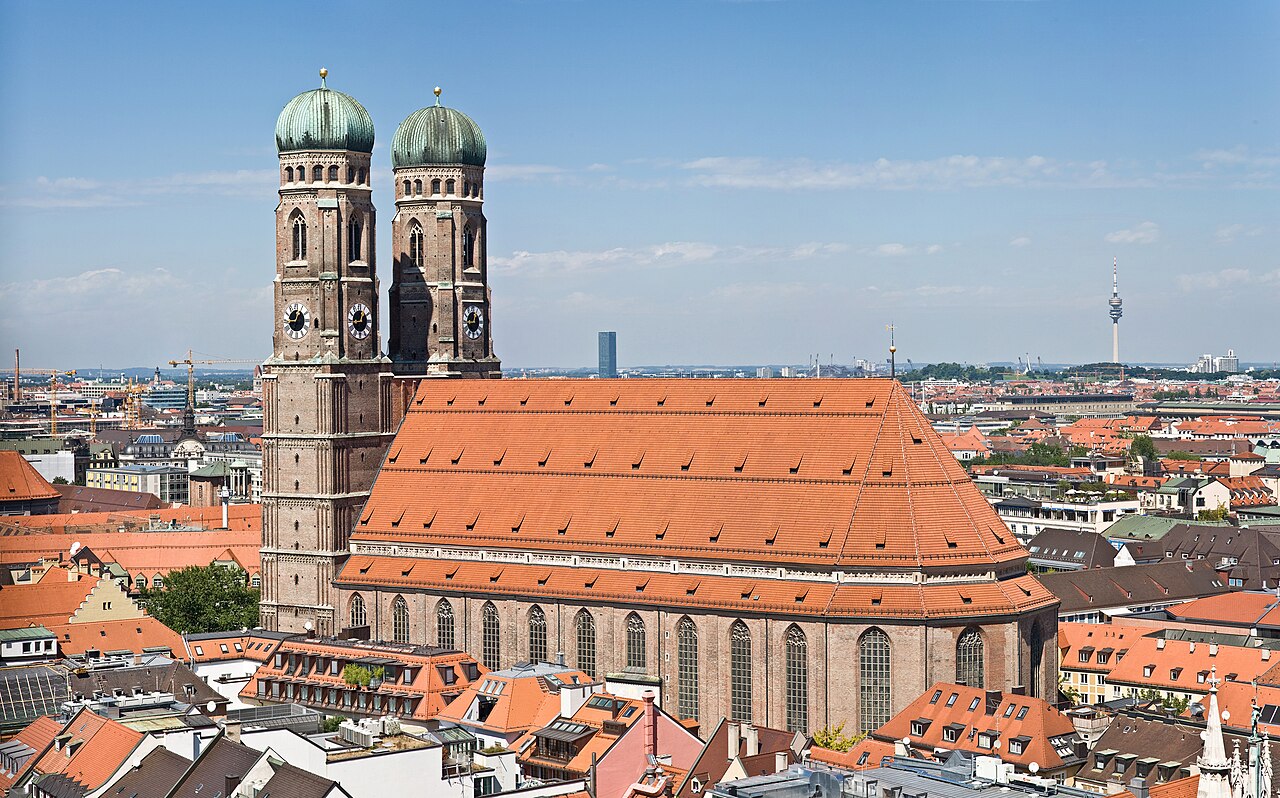
Our guide lists 10 places of worship in Munich, from Gothic and Baroque churches in the old town to a Benedictine abbey in the Maxvorstadt and smaller prayer rooms used by local communities.
The Salvatorkirche is a Gothic church that was once the cemetery church of the Frauenkirche; since 1829 it has been used by Greek Orthodox Christians. On Neuhauser Straße, the Bürgersaal, also known as the Bürgersaalkirche, was built in 1709–1710 to a design by Giovanni Antonio Viscardi and is the prayer and meeting room of the Marian Men's Congregation. Viscardi also planned the Trinity Church (Dreifaltigkeitskirche) on Pacellistraße, a Bavarian Baroque votive church built from 1711 to 1718 that serves as a Carmelite monastery church.
In the Maxvorstadt, St. Boniface's Abbey is a Benedictine monastery founded in 1835 by King Ludwig I of Bavaria, as part of his effort to restore monasteries destroyed during secularisation. In the same district, St. Markus is a Lutheran church whose original building, designed by Rudolf Gottlieb, dates from the 1870s and was damaged in the Second World War.
The guide also maps the Islamic community "Balkan" on Karlstraße, a Bengali prayer room on Brienner Straße, the chapel in the Archdiocesan Ordinariate and the Lighthouse on Augustenstraße. These are active places of worship: dress respectfully, keep quiet during services and follow local rules on access and photography.
Updated:
10 places in our guide
1. Main cathedral / church
City
Main cathedral / church in Munich.
2. Basilika St. Bonifaz
Maxvorstadt
St. Boniface's Abbey is a Benedictine monastery in Maxvorstadt, Munich, Bavaria, Germany. It was founded in 1835 by King Ludwig I of Bavaria, as a part of his efforts to reanimate the country's spiritual life by the restoration of the monasteries destroyed during the secularisation of the early 19th century.
3. Dreifaltigkeitskirche
Pacellistraße
The Trinity Church is a religious building in Munich, southern Germany. It is a votive church and was designed in Bavarian Baroque style according to plans from Giovanni Antonio Viscardi from 1711 to 1718. It is a monastery church of the Carmelites and a church of the Metropolitan parish of Our Blessed Lady.
4. St. Markus
Maxvorstadt
St. Markus is a Lutheran church located in Maxvorstadt, Munich, Bavaria, Germany. The original church building was constructed in the 1870s and designed by architect Rudolf Gottlieb. The original building was damaged during the Second World War.
5. Salvatorkirche
Salvatorstraße
Salvatorkirche is a gothic church in Munich, Germany, the former cemetery church of the Frauenkirche. Since 1829 the church has been used by Greek Orthodox Christians and it was the headquarters of the Metropolitan of Germany and Exarch of Central Europe.
6. Bürgersaalkirche
Neuhauser Straße
The Bürgersaal is a historical building in Munich, Germany. Also known as Bürgersaalkirche since the consecration of the altar on May 13, 1778, it is the prayer and meeting room of the Marian Men Congregation "Annunciation". It was built in 1709/1710 to a design by Giovanni Antonio Viscardi.
7. Islamische Gemeinschaft ''Balkan'' e.V.
Karlstraße
8. Kapelle im Erzbischöflichen Ordinariat
Munich
9. Lighthouse - Bible. Music. Free Time.
Augustenstraße
10. Bangalischer Gebetsraum
Brienner Straße
Questions travellers ask
- Which places of worship does the Munich guide include?
- Among its 10 entries are St. Boniface's Abbey (Basilika St. Bonifaz), the Trinity Church, St. Markus, the Salvatorkirche, the Bürgersaalkirche, the Islamic community "Balkan", a Bengali prayer room, the chapel in the Archdiocesan Ordinariate and the Lighthouse.
- Which church in Munich is Greek Orthodox?
- The Salvatorkirche, a Gothic church that was once the cemetery church of the Frauenkirche, has been used by Greek Orthodox Christians since 1829.
- Who designed the Trinity Church and the Bürgersaal?
- Giovanni Antonio Viscardi. The Bürgersaal was built in 1709–1710, and the Baroque Trinity Church from 1711 to 1718.
- Is there a Lutheran church in the guide?
- Yes: St. Markus in the Maxvorstadt, whose original building dates from the 1870s.
- Does the guide include non-Christian places of worship?
- Yes: the Islamic community "Balkan" on Karlstraße. The guide also lists a Bengali prayer room on Brienner Straße.